Beyond the Blue Ridge: How Appalachia's Secret Hollows Are Cautiously Welcoming the Outside World
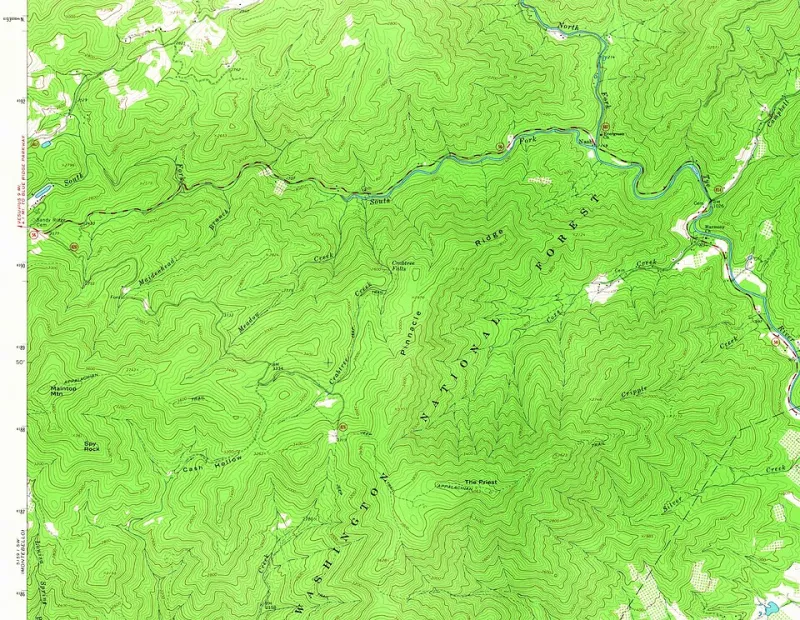
Photo: USGS, Public domain, via Wikimedia Commons
There's a particular kind of quiet that settles over you when you drop into one of Appalachia's deep mountain hollows. Not the silence of emptiness — more like the hush of a place that's been minding its own business for a very long time. These aren't valleys in the dramatic, postcard sense. They're narrow, creek-carved pockets folded between ridges so old the geology textbooks call them among the most ancient on Earth. And for most of American history, they've stayed exactly that way: folded shut.
That's starting to change. Slowly, carefully, and — if done right — beautifully.
Why These Hollows Stayed Hidden So Long
Appalachia stretches across parts of 13 states, from southern New York all the way down into Alabama and Mississippi. Within that sprawling mountain chain, there are hundreds of named hollows — and likely just as many unnamed ones — that never made it onto a tourist map. The reasons are layered.
Some communities were deliberately insular, shaped by Scots-Irish and German settler traditions that valued self-sufficiency above outside connection. Others were simply inaccessible; a hollow that requires fording a creek twice and navigating four miles of unpaved road doesn't exactly attract the weekend crowd. And then there's the cultural baggage. Decades of condescending media portrayals left many hollow communities deeply skeptical of outsiders with cameras and curiosity.
"People came in here before thinking they were visiting a museum," says Daniel Combs, a fourth-generation resident of a small hollow in eastern Kentucky who now leads hiking tours for a handful of vetted visitors each season. "They wanted to see poverty or something exotic. That's not what we are. We're just people who live here."
Combs started guiding in 2019, after a conversation with a college friend who worked in ecotourism in Appalachian North Carolina. The idea was simple: bring in travelers who actually want to learn, keep the groups small, and make sure the money stays local.
The Travelers Who Ventured In
Marcella Torres, a hiking enthusiast from Asheville, North Carolina, booked a guided hollow tour in the Clinch Mountain area of southwest Virginia two summers ago. She'd done the Appalachian Trail sections, hit the Smokies every other year, and was hungry for something that felt less worn-in.
"I didn't know what to expect," she admits. "I'd read a little about the history of the region, but nothing really prepares you for standing in a hollow where the same family has farmed the same bottomland for six generations. There's a weight to it. A realness."
Her guide walked her through medicinal plant traditions, pointed out the remnants of a mid-century logging operation, and introduced her to an elderly woman who still kept a working grist mill on her property. Torres spent the better part of an afternoon there, listening.
"Nobody was performing for me," she says. "That's what I kept thinking. This was just... life."
That authenticity is precisely what a growing number of adventure travelers are chasing — and exactly what local guides like Combs are working to protect.
Accessibility Improvements: A Double-Edged Road
Over the past decade, some pockets of rural Appalachia have seen modest infrastructure improvements — better cell coverage in select areas, repaved county roads, upgraded trailheads funded through USDA rural development grants. On one hand, this makes logistics easier for visitors. On the other, it raises a question that hollow communities are actively wrestling with: how much access is too much?
"The road coming into our area got paved about three years ago," says one hollow resident in western North Carolina who asked to remain unnamed. "First summer after, we had strangers just driving through slow, looking around. Didn't stop, didn't talk to anyone, just... looking. That felt wrong."
It's a tension that ecotourism advocates know well. The very qualities that make a place worth visiting — its remoteness, its cultural integrity, its unhurried pace — are exactly what unchecked tourism tends to erode. The hollows that are finding the most success are those working with organizations like the Appalachian Community Fund or local heritage nonprofits to develop visitor frameworks on their own terms.
How to Visit Responsibly
If you're thinking about exploring Appalachian hollows, the single most important thing you can do is go with a local guide. Not a regional outdoor company headquartered in a city — a guide who actually lives in or near the community you're visiting. These guides exist, though you won't always find them on the first page of Google results. Check with regional visitor centers in counties like Wise, Virginia; Breathitt, Kentucky; or Macon, North Carolina. Ask about heritage tourism programs. Look for connections through Appalachian studies programs at local universities.
Beyond that, a few principles go a long way:
- Ask before photographing people or private property. This should go without saying, but it bears repeating.
- Spend money locally. Fill up your gas tank in town. Eat at the diner, not the chain on the highway. Buy the handmade basket or the jar of sourwood honey.
- Listen more than you talk. You're the guest here.
- Leave the hollow exactly as you found it. Pack out everything you pack in, stay on established paths, and don't pick plants or disturb anything.
What You'll Find When You Get There
Depending on where you go and who's guiding you, an Appalachian hollow visit might include old-growth forest hiking, creek fishing, storytelling sessions, traditional music, working farm visits, or simply the experience of sitting with someone on a porch and watching the ridgeline change color as the afternoon light shifts.
None of it is Instagram-optimized. All of it is real.
"I think people are tired of places that feel curated," says Combs. "They want something that actually happened, not something that was built for them to consume. The hollow is real. It's always been real. We're just starting to let a few people in to see that."
That careful, conditional openness is worth respecting. These places survived centuries by staying on their own terms. The best thing a traveler can do is honor that — and consider themselves lucky to have been let in at all.