Running Into the Deep End: Why Ultramarathoners Are Ditching Desert Flats for the Hollow
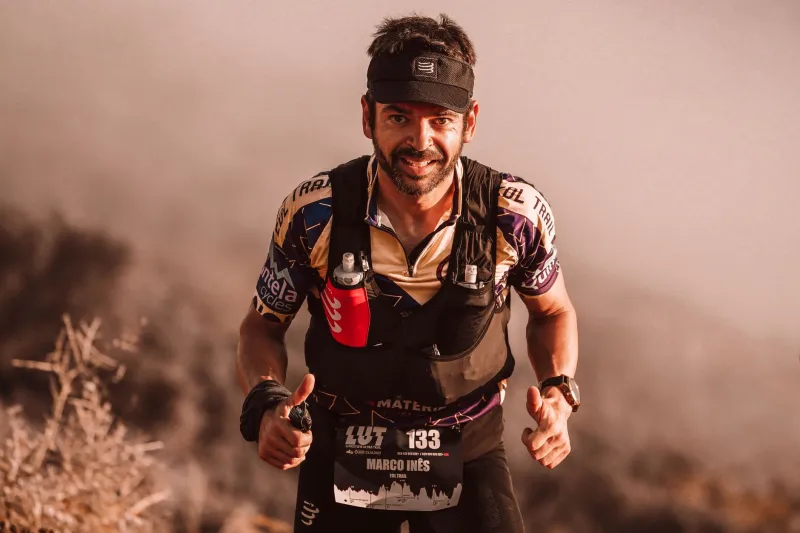
For decades, the image of ultramarathon running was baked into a particular kind of landscape: sun-scorched flats, endless horizon, a runner reduced to a tiny speck against a merciless sky. Badwater. Western States. The Moab 240. These were the proving grounds, and their vastness was the point. You ran against the open, against the heat, against yourself.
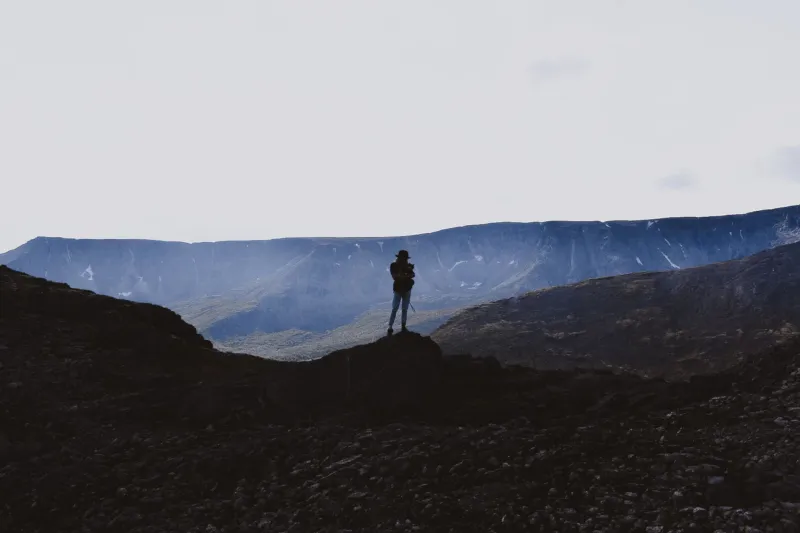
But something is shifting. Quietly, then all at once, a growing number of ultrarunners — from elite competitors chasing podiums to weekend warriors chasing something harder to name — are turning their eyes toward a different kind of terrain entirely. They're heading into the valleys. The hollows. The places where the map gets vague and the ridgelines close in.
And once they go in, most of them say they can't go back.
What the Valley Does That the Desert Can't
Ask any runner who has completed a valley-based ultra and you'll get the same pause before the answer. There's a search for the right words, like the experience is still being processed.
"On a desert course, you can see what's coming for miles," says Marcus Dellwood, a Colorado-based ultrarunner who finished the Ouray 100 — a brutal valley-threaded race in the San Juan Mountains — last summer. "In the valley, you have no idea. You round a bend and there's a 2,000-foot climb that wasn't on the map. Or wasn't legible on the map. The terrain is always negotiating with you."
That negotiation is exactly the point. Valley courses introduce a set of physical and psychological variables that flat or even open-mountain terrain simply doesn't replicate. Elevation changes come fast and brutal. Creek crossings appear without warning. The walls of a hollow can funnel wind in unpredictable directions, and the canopy — when there is one — plays tricks with light and temperature. You might drop 1,800 feet in two miles, then immediately climb it back.
Race directors are paying attention. Events like the Hellbender 100 in North Carolina's Nantahala region and the Ouachita Trail 50 in Arkansas have built devoted followings precisely because their valley geography demands a different kind of runner — or forces any runner to become a different kind of person mid-race.
The Psychology of the Enclosed Course
There's a mental dimension to valley running that deserves its own conversation. On an open flat, your brain can project forward. You can see mile 40 from mile 20 and start dreading it. In a valley, the terrain makes that impossible. The next ridge blocks the view. The hollow swallows your sense of distance.
Some runners find this maddening. Others find it liberating.
"I have pretty serious race anxiety," admits Priya Kamdar, an amateur ultrarunner from Asheville, North Carolina, who completed her first valley ultra two years ago on a course threading through a remote section of the Smokies. "On open courses I'd spend half the race catastrophizing about what was ahead. In the valley, I couldn't see ahead. I had to just run what was in front of me. It was the most present I've ever felt in a race."
Sports psychologists who work with endurance athletes have started noting this effect more formally. The enclosed landscape of a valley essentially enforces a kind of mindfulness that runners often struggle to manufacture on their own. When the walls come in and the horizon disappears, the only temporal reality is the ground under your feet.
Small Towns, Big Stakes
The communities sitting at the mouths of these valleys are noticing. And they're responding — carefully, cautiously, and with varying degrees of enthusiasm.
Take Tellico Plains, Tennessee, a small town at the gateway to the Cherokee National Forest and a constellation of river valleys that have started attracting trail and ultra events. Local outfitters have seen a measurable uptick in business during race weekends. The diner on the main drag runs out of pie by noon on race Saturdays. A couple of local families have converted spare rooms into race-weekend rentals.
"It's been mostly good," says one longtime resident who asked not to be named. "The runners are respectful, they spend money, and most of them actually want to know about the place. They're not just passing through. They're here because of here."
That distinction matters in communities that have watched other tourism trends blow through without leaving much behind. Valley ultramarathoners, by and large, are not looking for a resort experience. They want the real thing — the mud, the creek water, the gas station breakfast at 4 a.m. before a race start. That appetite for authenticity tends to translate into a more genuine economic relationship with the places they visit.
But the growth isn't without friction. Trail erosion is a real and documented concern in some of the more heavily trafficked hollow systems. Race organizers are increasingly required to work with land managers — the Forest Service, state parks, private landowners — to develop use agreements that protect sensitive terrain. Some communities have pushed back against events entirely, wary of the infrastructure strain and the cultural disruption that comes with hundreds of out-of-towners descending on a place that's spent generations staying off the radar.
The New Frontier, Again
There's something almost recursive about this trend. The ultramarathon world has always been driven by the search for harder, more remote, more demanding terrain. First it was the desert. Then the high mountains. Now the valley — the enclosed, technical, psychologically complex landscape that most runners have historically tried to avoid — is emerging as the new edge.
Race director Claudia Renfrew, who launched a small but rapidly growing valley ultra in the Ozarks three years ago, puts it plainly: "Runners are bored with suffering in a straight line. They want suffering that surprises them. The valley does that every single time."
For the communities sitting inside these landscapes, the calculus is more complicated. The runners bring money and attention, but they also bring exposure — and exposure, for places that have survived precisely by staying hidden, is a double-edged thing.
The best race organizers seem to understand this. The events that are earning the most trust from local communities are the ones treating the valley not as a backdrop or a brand, but as a living system with its own logic and its own limits. Capped field sizes. Mandatory trail restoration hours. Race fees that funnel directly into local conservation efforts.
It's a fragile balance. But then, so is running 100 miles through terrain that doesn't care whether you finish.
Maybe that's the whole point.