Once a Valley, Always a Valley: The Strange Pull That Keeps Drawing People Back
Marcy Ellison left her home valley in western North Carolina at twenty-two with a car full of clothes and what she describes as "a very confident plan." She was headed to Charlotte. Then Atlanta. Then, eventually, a decade-long stretch in Denver where she built a career, a social life, and a condo with a rooftop view of the Rockies.
She moved back to the valley when she was thirty-four.
"I kept telling myself I'd visit more," she says. "And then visiting stopped being enough."
Marcy isn't unusual. Talk to people who grew up in or spent formative years inside a valley — whether it's a tight Appalachian hollow, a wide agricultural basin in the Central Valley of California, or a remote river corridor in the Ozarks — and you start hearing the same story told in different voices. They leave. They build something somewhere else. And then, often without fully understanding why, they come back.
So what exactly is happening here? Is this just nostalgia dressed up in hiking boots? Or is there something specific about valley living that cities and suburbs genuinely can't replicate?
The Shape of a Place
Geographers and environmental psychologists have spent years studying what's called "place attachment" — the emotional bonds people form with specific landscapes. It's a well-documented phenomenon, but most of the research focuses on broad categories: urban versus rural, coastal versus inland. Valleys, as a specific landform, don't get nearly as much attention as they probably deserve.
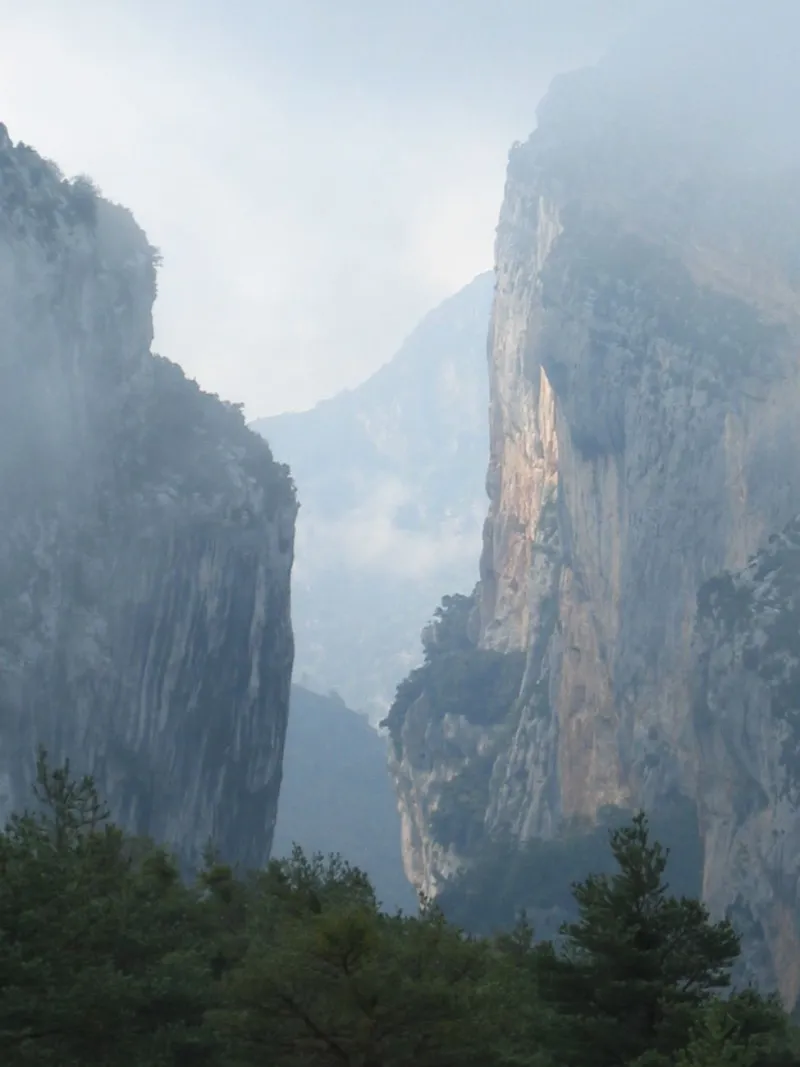
That's a gap worth sitting with. Because valleys are a genuinely distinct kind of place. They're enclosed. They have a shape you can feel. The walls — whether they're ridge lines, canyon faces, or gently sloping hills — create a visual boundary that most environments simply don't offer. You always know, more or less, where you are. The horizon isn't infinite. It's defined.
For some people, that containment feels limiting. For others, it feels like the most grounding thing in the world.
"There's a reason the word 'nestled' shows up every time someone writes about a valley town," says one geographer who studies rural landscapes in the mid-Atlantic region. "These places literally hold you. And when you leave, you feel the absence of that holding."
What the City Doesn't Give You
Jordan Phelps grew up in a small valley community in Idaho's Clearwater region. He left for Boise at nineteen, spent his twenties there, then did a stint in Portland before landing in Seattle for five years. He's back in Idaho now — not in a city, but close to where he started.
"Seattle was incredible. I genuinely loved it," he says. "But I never felt like I knew where I was. Like, spatially. You're just kind of floating in this grid."
That spatial disorientation shows up again and again in conversations with valley returnees. It's not that they disliked cities. Most of them thrived, at least for a while. It's that something about open, flat, or densely built environments left them feeling — and this is a word several people used independently — unmoored.
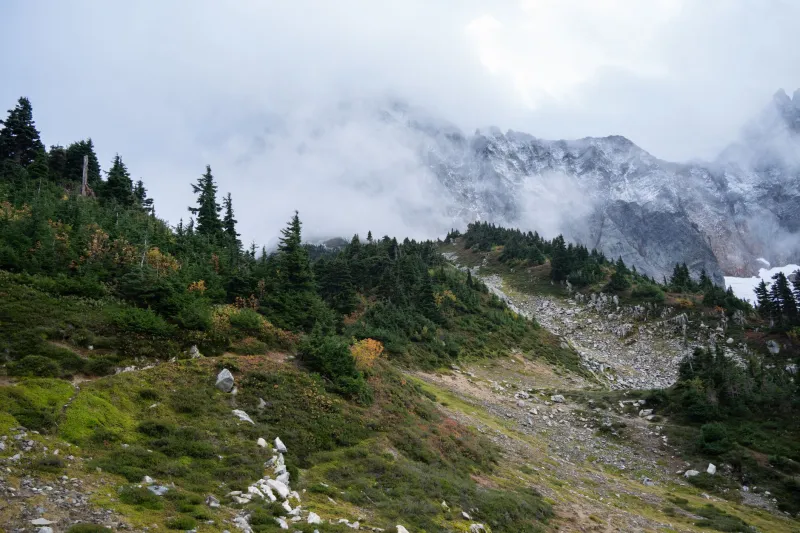
In a valley, the landscape itself provides orientation. The ridge to the east catches the morning light. The creek runs south. The gap in the hills is where the road comes in. You don't need a phone to know where you are in relation to everything else. That kind of embodied, spatial knowledge is something you build over years of living in a specific terrain, and it doesn't transfer.
Nostalgia or Something Else?
It's tempting to write all of this off as nostalgia — that warm, slightly unreliable feeling that makes the past look better than it probably was. And sure, some of what draws people back to valleys is almost certainly that. Childhood memories. Family. The specific smell of a creek in October.
But the people we talked to pushed back on the nostalgia label pretty hard.
"Nostalgia is about the past," Marcy says. "What I feel when I'm back here isn't about the past. It's about right now. The way the light comes down the ridge in the afternoon. That's not a memory. That's just happening."
There's a distinction worth making here between nostalgic attachment — longing for a time — and what some researchers call topophilia, a term coined by geographer Yi-Fu Tuan to describe genuine love of place. Topophilia isn't about when. It's about where. And valleys, with their distinctive shapes and enclosed ecosystems, seem to generate it in unusually strong doses.
The Thing You Can't Explain at Dinner Parties
One of the more consistent themes in these conversations is the difficulty of explaining the return. When you move back to a valley from a city, people in your city life tend to have questions. Are you okay? Did something happen? Is this permanent?
"Nobody asks those questions when you move to New York," Jordan laughs. "But move back to a valley in Idaho and suddenly everyone wants to know if you've given up."
The assumption embedded in that reaction — that leaving a valley is progress and returning is retreat — says something about how American culture tends to value place. Bigger markets, denser networks, more options: these are the metrics we use to rank locations. Valleys, almost by definition, score low on all of them.
But the people who return aren't scoring their lives on those metrics anymore. Or maybe they tried to, and found the math didn't add up the way they expected.
"I had more options in Seattle," Jordan says. "I also felt like none of them were quite right. Here, there are fewer options. But the ones that exist actually fit me."
What Stays When You Go
There's a concept in psychology called the "baseline landscape" — the visual environment you're most deeply calibrated to, usually formed in childhood or early adulthood. Some researchers argue that people spend their whole lives, consciously or not, trying to find environments that match that baseline.
For valley people, the baseline is enclosed, layered, and defined by terrain. Every flat, open, or vertically overwhelming environment they move through is being quietly compared to it — and usually coming up short.
Marcy puts it simply: "I used to think I was homesick for my family or my town. But my family moved. My town changed. And I still needed to come back. So it wasn't that. It was the shape of the land."
That's the valley dweller's paradox, right there. You can leave the people. You can leave the town. You can build an entirely new life somewhere the mountains don't press in close and the creek doesn't run through your backyard.
But the shape of the land goes with you. And eventually, for a lot of people, it calls you home.
Have you left a valley and found yourself being pulled back? We'd genuinely love to hear your story — reach out through the contact page or find us on social.