Boxed In and Thinking Clearly: What Enclosed Landscapes Do to the Decisions You Make
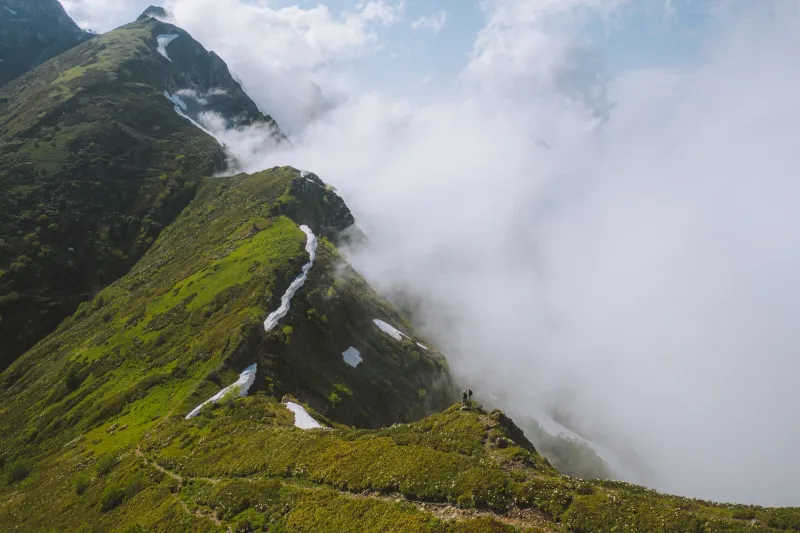
Most people assume that big decisions require big views. The corner office with floor-to-ceiling windows. The mountain summit where the whole world spreads out below you. The open plain where the horizon seems to promise infinite possibility. We've sold ourselves on the idea that expansiveness equals clarity.
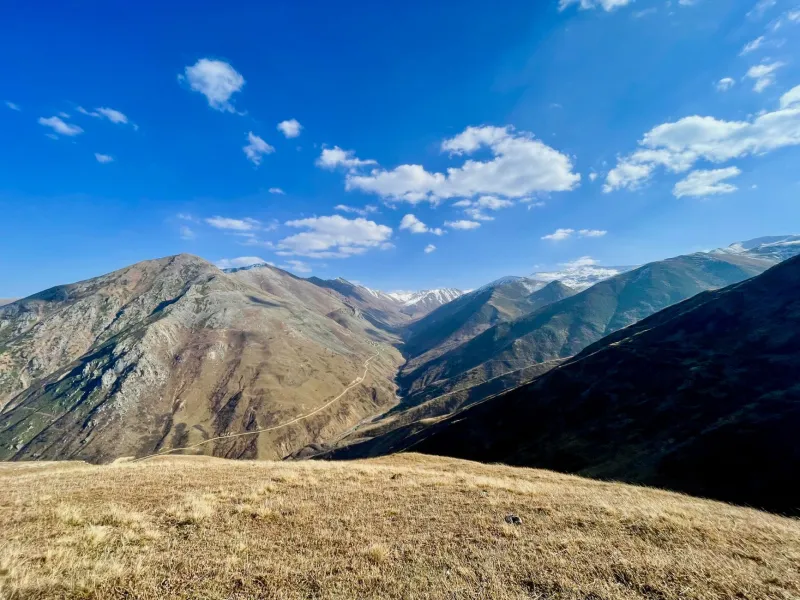
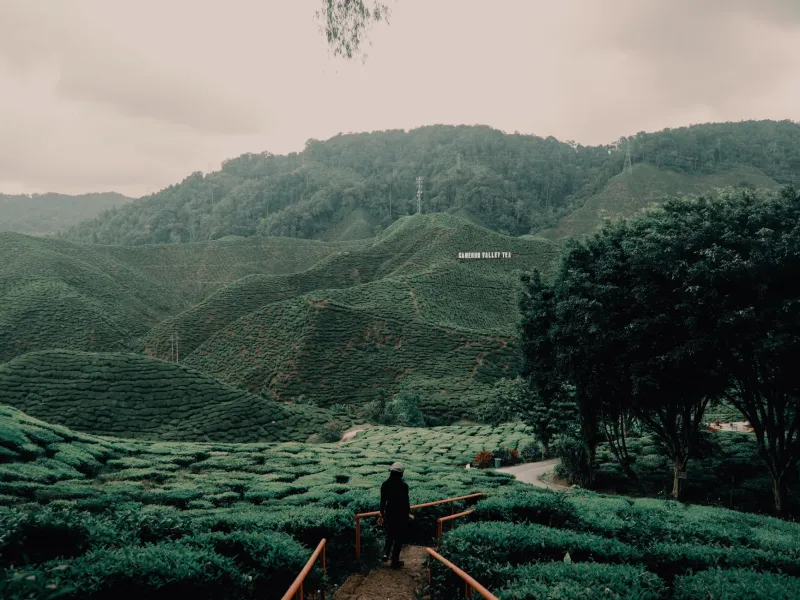
But a growing number of researchers, therapists, and entrepreneurs who've spent real time in enclosed natural landscapes — valleys, hollows, carved-out river gorges — are starting to push back on that assumption. Hard.
Turns out, being hemmed in might be exactly what your brain needs.
The Problem With the Open View
Dr. Rachel Kimura is a cognitive neuroscientist at the University of Oregon who has spent the better part of a decade studying how physical environments shape executive function. She didn't start out interested in geography. She was studying decision fatigue — the well-documented phenomenon where the quality of human choices degrades the more options we're forced to evaluate.
"We kept running into this variable we couldn't explain in lab settings," she says. "People would perform differently on identical decision-making tasks depending on where they'd spent time before the test. Not what they'd eaten. Not how much sleep they'd gotten. Where they'd been."
The outlier that kept showing up? Participants who'd spent time in physically enclosed outdoor environments — valleys, canyon trails, wooded hollows — consistently outperformed those who'd been in open or urban settings on tasks requiring what Kimura calls "consequential reasoning." Not reaction time. Not memory recall. The deeper, slower thinking that underlies the choices that actually matter.
The working theory involves attentional load. Open environments, especially visually complex ones like cities or even sweeping mountain panoramas, demand constant low-level threat assessment from the brain. Your visual cortex is always scanning, always triangulating, always processing peripheral movement. It's exhausting in ways you don't consciously register.
A valley, by contrast, offers defined edges. Your brain registers the ridgelines, files them as boundary, and stops scanning. "It's like the landscape tells your nervous system: nothing's coming from that direction. You can stop watching," Kimura explains. "And when you stop watching, you start thinking."
What Entrepreneurs Are Finding Out the Hard Way
Marcos Delgado didn't read any neuroscience before he moved his product strategy sessions from a San Francisco conference room to a rented cabin in the Shenandoah Valley. He did it because he was desperate.
"We were burning through decisions," he says. Delgado co-founded a mid-size logistics software company and had watched his leadership team make three significant strategic miscalls in a single quarter. "We had every tool. Whiteboards, consultants, standing desks. We were doing everything right on paper and still coming out with the wrong answers."
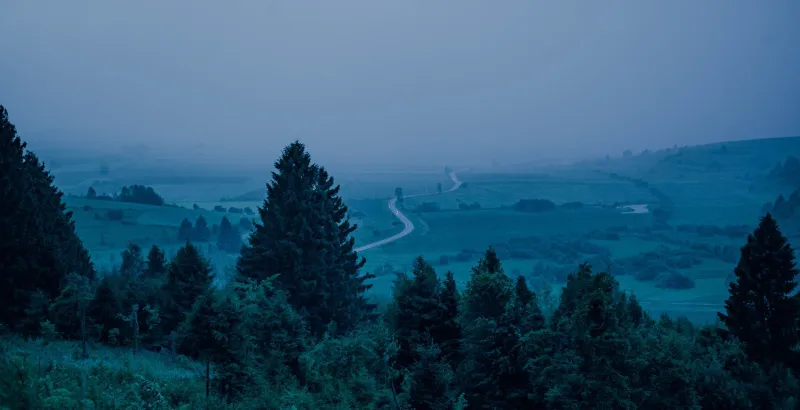
A friend suggested getting out of the city. Delgado took it further — he found a property tucked into a narrow Virginia hollow, no cell service, surrounded on three sides by forested slopes. He brought his four co-founders for a long weekend with a single agenda item: figure out what they were actually building.
"By the second morning, something had shifted," he says. "People were quieter. But when they spoke, it was different. More considered. Less performance."
They came out of that weekend with a strategic pivot that Delgado credits with saving the company. He's run a version of that retreat every year since.
He's not alone. Among a certain subset of founders and executives, the valley retreat has become a quiet alternative to the traditional off-site. Less about team-building exercises, more about what happens when you remove the visual noise of expansion and replace it with the psychological permission of enclosure.
The Therapist's Read
Jamie Okafor has been running wilderness therapy programs in the Ozarks for eleven years. Her clients range from adolescents with behavioral challenges to high-functioning adults navigating career transitions or relationship breakdowns. She works almost exclusively in valley and hollow terrain, and she's deliberate about it.
"When I first started, I thought it was just about removing distractions," she says. "Get people away from their phones, away from their routines. But I've come to think it's more specific than that."
What Okafor has observed over years of facilitated sessions in enclosed landscapes mirrors what Kimura is measuring in controlled settings. People in valleys, she says, tend to stop performing their decision-making process. They stop narrating the choices they're considering and start actually making them.
"There's something about the contained horizon," she says. "When a person can see the edges of where they are, they seem to feel the edges of what they're dealing with. The problem becomes the right size. Not infinite. Manageable."
This is a meaningful distinction. One of the primary obstacles to good decision-making isn't lack of information — it's the perception that the problem is larger than the person facing it. Open environments, ironically, can reinforce that feeling. A valley, with its visible walls and finite sky, seems to do the opposite.
What This Means for How You Travel
None of this is a prescription. Not every important choice needs to be made in a hollow in West Virginia. But there's something worth sitting with here, especially if you're the kind of person who travels with intention.
The instinct to seek out a summit for perspective is deeply human. It makes symbolic sense. But the next time you're carrying a decision that matters — a career question, a relationship crossroads, a fundamental reassessment of what you're building — it might be worth asking whether you actually need more horizon, or whether you need less.
The valley doesn't give you a view of everything. That's exactly the point. It gives you a view of what's here, what's close, what's real. It draws a line around the problem and says: this is the size of it. Now think.
Some of the clearest-headed people we've talked to on this site — the ones who went looking for a landscape and came back with answers — found those answers not at the top of something, but down inside it.
Where the map ends, the thinking begins.