Loved to Death: How Hidden Valleys Vanish the Moment They Get Famous
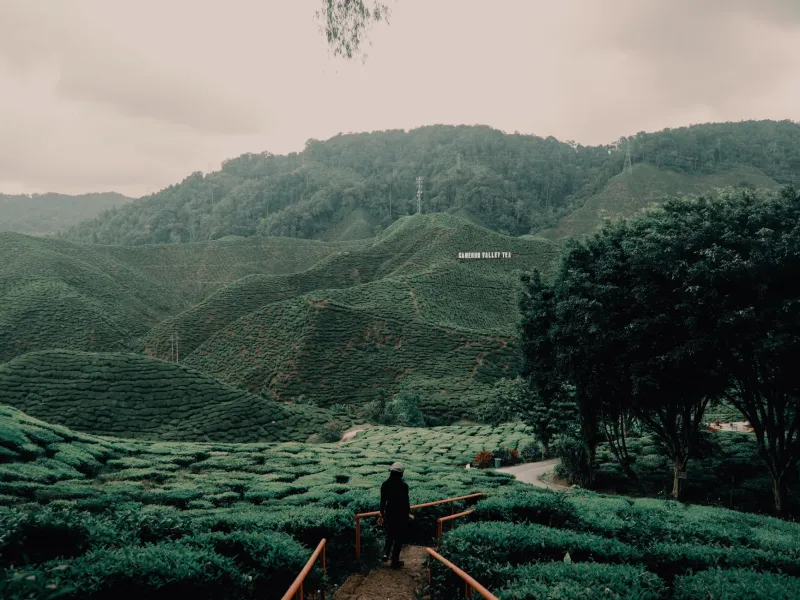
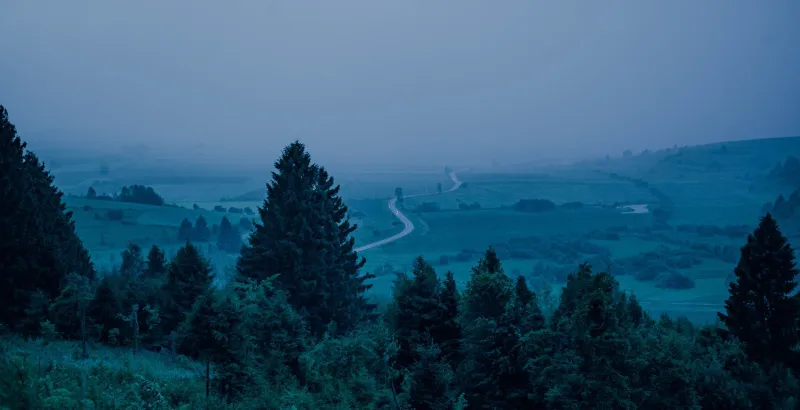
There's a hollow in eastern Tennessee that, as of about four years ago, almost nobody outside a fifty-mile radius knew existed. The kind of place where the same families have farmed the same creek-fed bottomland for six or seven generations. Where the road in is unmarked and the road out is the same road. Where the word "tourism" would have sounded, to the people who lived there, like something from another country.
It's not that place anymore.
A single video — posted by a hiker with a modest following who'd stumbled through on a backpacking trip — racked up enough views to put the valley on the radar of larger accounts. Within eight months, weekend traffic had increased by an amount that one longtime resident, a retired schoolteacher named Donna Prater, describes simply as "unrecognizable."
"I don't begrudge anyone wanting to see a beautiful place," Prater says carefully. "But I want to be honest: what they're coming to see is already changing because they're coming."
This is the paradox at the center of a conversation that's getting louder in conservation circles, in local communities, and increasingly among travel writers themselves: the act of documenting a hidden place may be inseparable from the act of destroying it.
The Influencer Pipeline
The mechanism is by now fairly well understood, even if it's rarely discussed openly in the travel content industry. A creator finds a genuinely remote location — often through considerable effort, sometimes through relationships with locals who trusted them. They document it. The content performs. Larger accounts amplify it. The location gets pinned, saved, shared. Within a season or two, what was a locals-only hollow is now a destination.
Brandon Chu has watched this cycle play out multiple times. He runs a small conservation nonprofit focused on Appalachian watershed protection and has spent years building relationships with communities in remote valleys across Kentucky, Virginia, and Tennessee. He's not anti-tourism, he's careful to note. But he's deeply skeptical of the speed.
"These places don't have infrastructure for what's coming at them," he says. "No parking. No maintained trails. No waste facilities. The landscape absorbs the first wave and the second wave and then it just starts showing the damage."
The damage isn't only ecological. In many of these valleys, the social fabric is equally fragile — and equally at risk. Property values climb. Longtime residents who've rented for decades find themselves priced out. Small agricultural operations that were marginal before become untenable when the surrounding land gets purchased for short-term rentals.
"The people who made the place worth visiting are often the first people who can't afford to stay," Chu says.
The Writer's Dilemma
Here's where it gets uncomfortable for anyone in the business of writing about wild places — including this publication.
Travel writing has always occupied a morally ambiguous position. The whole project involves finding something worth describing and then describing it to an audience that will, in some number of cases, decide to go there. At low volumes, this is fine. At internet scale, it's something else.
Sara Whitfield has been writing about off-the-beaten-path destinations in the American South for over a decade. She's watched places she wrote about early in her career transform dramatically — not always for the worse, she acknowledges, but always irreversibly.
"I've started asking myself a question before I file anything," she says. "Not 'is this a good story?' but 'what happens to this place if this story works?' Those are very different questions."
Some writers have responded by going deliberately vague — describing the general character of a place without providing coordinates, trail names, or specific access routes. Others have moved toward what might be called conservation journalism: writing about the threats facing a landscape rather than the landscape itself, hoping to generate protective attention rather than tourist traffic.
But neither approach fully resolves the tension. Vague descriptions still generate enough curiosity to send determined travelers searching. And even conservation-framed coverage can backfire — the story of a threatened place is still, in some readers' minds, an invitation to see it before it's gone.
What Local Residents Actually Want
The voices that get left out of this conversation most often are the ones with the most at stake: the people who live in these valleys year-round, whose lives and livelihoods are woven into terrain that visitors experience as scenery.
Donna Prater, back in that Tennessee hollow, is thoughtful about what she'd want travel writers to understand. "Some of us would like visitors," she says. "Some of us have businesses that depend on it. But we'd like to be part of the conversation about how that happens. Right now it just happens to us."
That distinction — tourism happening with a community versus to it — is one that conservation advocates like Brandon Chu frame as the central ethical question. Responsible coverage, in his view, would involve genuine community consultation before publication, not as a courtesy but as a condition.
"If the people who live somewhere haven't decided they want to be a destination, writing about them as one is a kind of taking," he says. "You're extracting the story and leaving the consequences."
No Easy Answers Down Here
We're not going to pretend this publication is above the problem. Every article we publish about a remote landscape is, on some level, an act of pointing. We've thought about that a lot. We'll keep thinking about it.
What we've landed on, for now, is something less than a policy and more than a shrug: we try to write about places in ways that serve the places, not just the readers. We try to ask whether the story we're telling is one the community would recognize and approve of. We try to resist the pull of the specific — the pinnable, the taggable, the coordinates in the caption.
It's imperfect. The tension doesn't resolve. But ignoring it, in a landscape that's shrinking faster than any map can track, feels like the worst option of all.
Some valleys are worth protecting precisely because most people haven't found them yet. The question every travel writer has to answer for themselves is whether their work is part of the protection or part of the problem.