The Map Is the Problem: On the Ethics of Writing Wild Places Into Existence
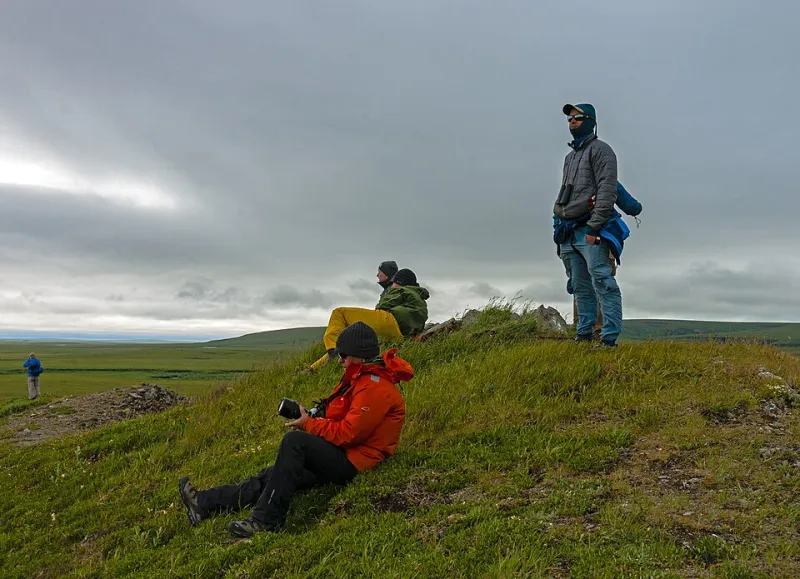
Photo: Daniel Case, CC BY-SA 3.0, via Wikimedia Commons
The Map Is the Problem: On the Ethics of Writing About Hidden Valleys
There's a joke that circulates among backcountry hikers: the best way to ruin a secret spot is to tell your best friend about it. The second-best way is to write a travel article.
It's funny because it's true. And if you're reading this on a travel website, you're already complicit.
We're not exempt from that tension here at In Search of the Valley. Our entire editorial identity is built on the premise that the most worthwhile places are the ones that haven't made it onto the mainstream radar yet. But the moment we describe them — even carefully, even responsibly — we become part of the machinery that changes them. That's worth sitting with for a minute.
When the Story Becomes the Damage
In 2016, a single Instagram post featuring a waterfall in a remote Oregon valley generated enough foot traffic to require the U.S. Forest Service to install a formal trailhead, portable restrooms, and a volunteer patrol within 18 months. The waterfall was the same. The valley was the same. But the experience of being there had fundamentally shifted. Locals who'd hiked in quietly for decades now shared the path with visitors who'd driven four hours specifically because an algorithm served them a photograph.
This pattern has repeated itself across the country with uncomfortable regularity. A travel magazine profiles a hidden canyon in southern Utah; within two years, the BLM is fielding complaints about fire rings and trampled cryptobiotic soil. A YouTube travel channel films a wild swimming hole in the Smoky Mountain foothills; the county eventually has to close it after erosion and waste accumulation make it a public health concern.
The writers and filmmakers behind that coverage rarely intended harm. Most were genuinely moved by what they found. That's precisely the problem.
The Paradox Has a Name
Geographers and conservationists have been wrestling with what some call the "publicity paradox" for decades: the act of documenting a place in order to celebrate or protect it often accelerates the very pressures it's meant to highlight. The more eloquently you describe a valley's solitude, the more people want to experience that solitude — and the less of it remains.
Randy Hawkins, a land manager with experience overseeing wilderness areas in the Southern Appalachians, has watched this cycle play out more times than he can count. "We've had situations where we're managing a trail that saw maybe 400 visitors a year," he says. "One well-written piece in a major outdoor publication, and we're looking at 4,000 the following season. The infrastructure isn't there. The ecology isn't built for it. And once you've crossed that threshold, it's very hard to walk it back."
For Hawkins and his colleagues, the frustration isn't directed at any single writer or outlet. It's systemic. "Nobody's doing anything wrong, technically. But collectively, we're making decisions that add up to real damage."
Not All Exposure Is Equal
It would be too easy — and frankly too convenient for a site like ours — to conclude that all travel writing about wild places is inherently irresponsible. The reality is more nuanced.
There's a meaningful difference between publishing turn-by-turn directions to a fragile alpine meadow and writing about the character of a region in ways that build appreciation without acting as a logistical invitation. There's a difference between naming a specific unmarked swimming hole and discussing the broader river corridor it sits within. Precision is the variable that matters most.
Some writers have started adopting what's being called "soft geography" — describing landscapes in enough detail to convey their essence without providing the coordinates that turn a story into a treasure map. It's a harder kind of writing, actually. Vagueness is easy. Purposeful restraint takes craft.
Laura Tipton, a freelance outdoor writer based in Asheville, North Carolina, made a deliberate shift in her approach after covering a small valley community in western North Carolina that she watched change visibly in the 18 months following her piece. "I went back and the parking pullout had been widened, there were fire pits everywhere, and the family that had let me camp on their property had put up a locked gate. I felt genuinely responsible for that," she says. "Now I ask myself: does this story require specificity, or does it require honesty? Usually it's the second one."
What Local Communities Actually Want
The communities living in and around these valleys often have the most complicated relationship with the coverage question. Tourism dollars are real. Visibility can mean the difference between a local business surviving or closing. At the same time, the residents who chose remote valley life often did so precisely because of its remove from the outside world.
In a small hollow community in eastern Tennessee, a town council voted last year against cooperating with a documentary crew that wanted to profile the area's landscape and traditional crafts. The decision wasn't unanimous, and the debate it sparked revealed a genuine split. Some residents saw the potential for economic revitalization. Others saw the end of the thing they'd stayed to protect.
"We're not anti-visitor," one council member explained at the time. "We're anti-becoming-a-destination. There's a difference."
That distinction — between welcoming people and being consumed by them — is one that travel media hasn't fully grappled with. The incentive structures of digital publishing, where traffic and engagement drive revenue, push toward more specificity, more shareability, more of the exact thing that accelerates the paradox.
Where That Leaves Us
We don't have a clean answer here. Honestly, if we did, it would probably be the wrong one.
What we do think is that the travel writing community — and the readers who fuel it — has a responsibility to hold this tension consciously rather than looking away from it. That means asking, before publishing a pin or a precise trail description, whether the story requires that level of detail or whether it's just easier to include it. It means listening to land managers and local communities rather than treating their caution as an obstacle to a good story. And it means being honest about the fact that "discovering" a place you read about online isn't discovery at all — it's participation in a well-worn pattern.
The valley paradox doesn't resolve. The best we can do is write with enough awareness of it that we slow the cycle down.
Sometimes the most responsible thing a travel writer can do is describe the feeling of a place so well that readers feel they've already been there — and don't need to go.