Why the Hollow Is the New Hub: Inside America's Valley-Born Creative Economies
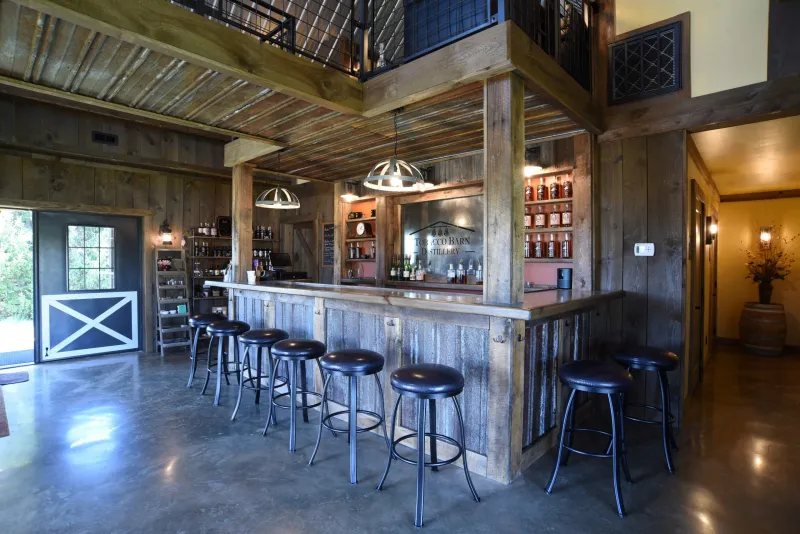
Photo: small craft distillery inside rustic barn rural Appalachian Kentucky hollow, via www.tobaccobarndistillery.com
There's a particular kind of quiet you only find when you're deep in a valley — the kind that settles over you like a second skin after the first hour or two. No notification sounds. No ambient city hum. Just the creek, the wind in the tree line, and whatever you brought with you in your head.
For most travelers, that quiet is the destination. For a growing number of entrepreneurs, artists, and makers, it's the raw material.
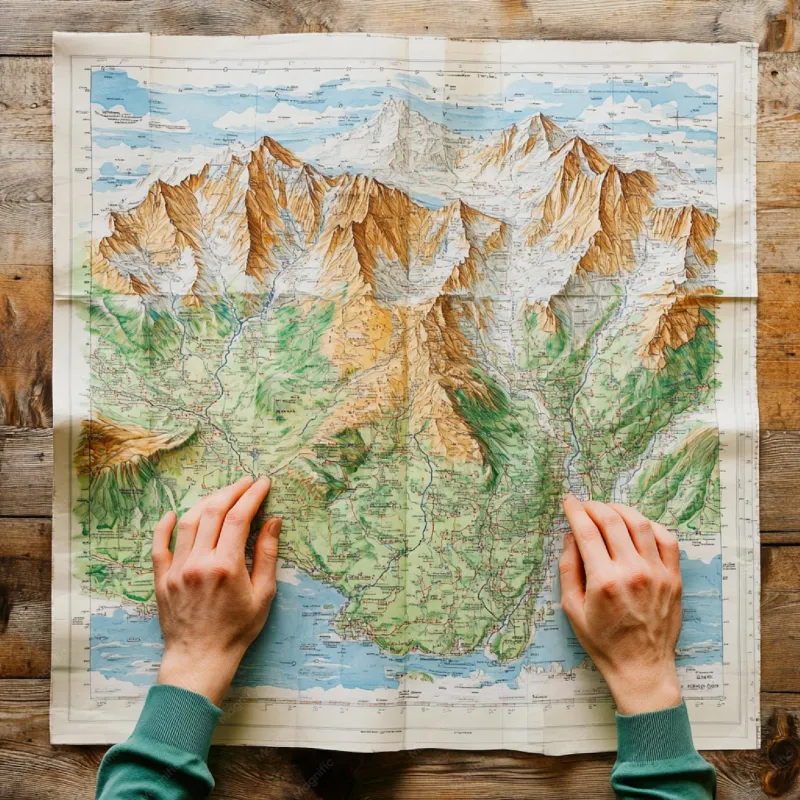
Across the country, from the limestone hollows of eastern Kentucky to the sandstone canyons outside Moab, Utah, a loose but unmistakable movement is taking shape — people who looked at the map, found the part that trails off into unmarked terrain, and decided that's exactly where they wanted to build something.
The Distillery Down the Dirt Road
Take the small-batch bourbon scene quietly expanding through the Appalachian hill country. While the big Kentucky distilleries run tours and sell gift shop merchandise off I-64, a different kind of operation is happening twenty miles off any main highway. Founders like Marcus Webb, who opened his craft distillery in a repurposed barn outside Berea, Kentucky, didn't stumble into the hollow by accident.
"I looked at what Nashville and Lexington were doing, and I knew I didn't want any part of that noise," Webb says, leaning against a copper still that looks like it belongs in a museum. "Out here, I control the water source, the grain, the process. Nobody's knocking on my door trying to rush me."
That unhurried pace, it turns out, is a competitive advantage. Webb's operation produces fewer than 800 cases a year, sells most of them through a small tasting room, and maintains a waiting list. The isolation isn't a limitation — it's the brand.
This pattern repeats itself across the country with surprising consistency. A ceramics studio in a narrow valley outside Taos, New Mexico. A furniture workshop tucked into the Ozarks. A small-run textile company operating out of a converted mill in a Western North Carolina cove. Each one chose the valley deliberately, and each founder tells a version of the same story: distance from distraction is distance from mediocrity.
What the Canyon Does to the Creative Brain
There's some neuroscience behind this, though the valley founders themselves rarely frame it that way. Research on attention restoration theory — the idea that natural environments help the brain recover from the kind of directed-attention fatigue that grinds down urban knowledge workers — suggests that sustained immersion in landscape-heavy, low-stimulus environments genuinely changes how people process problems.
Simply put: the valley slows the mental ticker tape down enough that original thought can get a word in edgewise.
Jordan Reyes runs a two-person digital design studio from a rented farmhouse in a canyon outside Salida, Colorado. She moved from Denver three years ago, took a pay cut on a couple of clients who wanted her in the office, and hasn't looked back.
"In Denver I was producing work," she says. "Out here I'm making things. There's a difference." Her studio now works with clients across the country — mostly outdoor brands and independent publishers — and she attributes the quality jump almost entirely to the environment. "When you look up from your screen and there's a canyon wall instead of another building, your brain resets differently. Every single time."
The Micro-Economy No One Is Mapping
What's remarkable about these valley-based ventures isn't just that they exist — it's that they're starting to cluster, creating informal micro-economies in places that conventional economic development reports have written off for decades.
In one small valley community in southern Colorado, within a five-mile radius you'll find a small-batch hot sauce operation, a letterpress print shop, a natural dye textile studio, and a recording engineer who works remotely with musicians in New York and Los Angeles. None of them knew each other before moving there. Now they share equipment, trade services, and occasionally collaborate on projects that none of them could have pulled off alone.
This kind of spontaneous economic ecosystem is showing up in pockets all over the rural West and Appalachian South. It doesn't look like a business district. There's no co-working space with exposed brick and pour-over coffee. But it functions like one — loosely, organically, and with a resilience that urban startup culture rarely manages.
"The valley selects for a certain kind of person," says Reyes. "You have to actually want to be here. That filters out a lot of people who are in it for the wrong reasons. What's left is people who are serious."
The Tradeoffs Are Real
None of this is to say that valley entrepreneurship is a pastoral fantasy with no rough edges. The founders we spoke with were candid about the friction involved.
Shipping costs are higher. Reliable internet — still the single biggest infrastructure complaint — can be genuinely hard to come by. Healthcare access is a real concern, especially for solo operators without employer coverage. And the isolation that fuels creativity can, in darker stretches, tip into something lonelier.
"I won't pretend there aren't weeks when I miss being able to walk to a coffee shop and have a conversation with a stranger," Webb admits. "But then I walk out to the rickhouse at sunset and I think — no, this is right. This is exactly right."
The founders who thrive long-term in valley settings tend to share a few traits: they're deeply intentional about their work, comfortable with self-direction, and genuinely moved by the landscapes they've chosen. The ones who struggle, they say, are those who treat the valley as a backdrop rather than a participant.
Where the Map Ends, the Business Begins
There's a phrase that comes up, unprompted, in almost every conversation with valley-based entrepreneurs: I stopped looking for the right place and started looking for the right conditions. The valley, for all of them, turned out to be both.
America's hidden hollows and canyon corridors aren't waiting to be discovered by some economic development agency or venture capital scout. They're already humming with activity — just quietly, off-grid, and on their own terms.
The next time you're planning a road trip through the rural West or winding your way through Appalachia, pay attention when the pavement runs out. Somewhere down that dirt road, somebody is probably building something extraordinary.
And they're doing it better because no one told them they couldn't.