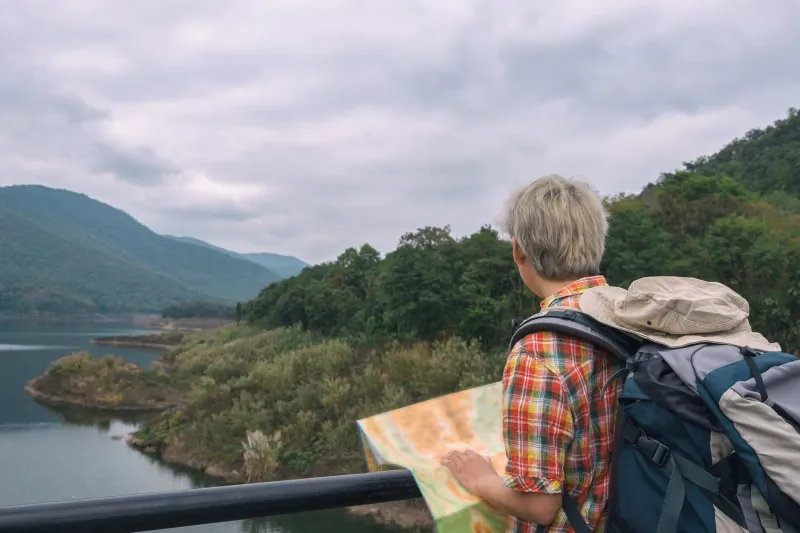
Founder Country: The Entrepreneurs Ditching Tech Hubs for America's Most Remote Valleys
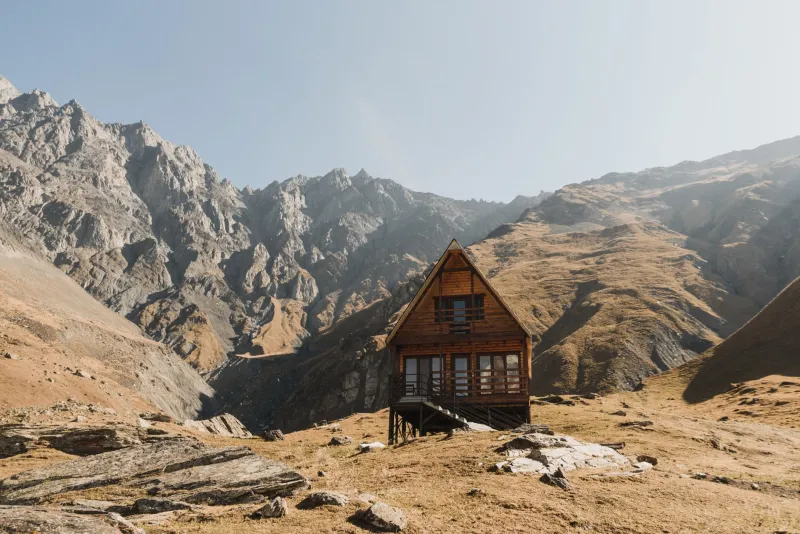
There's a particular kind of quiet that settles over a valley at dusk. The ridgelines go dark first, then the light drains out of the sky in slow stages, and for a few minutes everything just stops. No notifications. No ambient hum of a city deciding what it wants to be tonight. Just the sound of water somewhere below you, doing what water does.
For a growing number of American entrepreneurs, that quiet isn't a retreat from the work. It is the work.
Across the country — in the folds of Appalachia, in the high desert canyons of the Southwest, in the fog-draped coastal valleys of the Pacific Northwest — a counterintuitive movement is quietly gaining momentum. Founders who could theoretically plant themselves anywhere are choosing places most people couldn't find on a map. And they're not just surviving out there. They're building things.
The Pitch Nobody Expected
Ask Mara Hendricks why she moved her sustainable packaging startup from Austin to a small valley community in western North Carolina, and she doesn't miss a beat.
"I stopped having original thoughts," she says. "I was surrounded by smart people talking about smart things, and I was just... reflecting it all back. I needed friction of a different kind."
That friction came in the form of a rented farmhouse at the end of a gravel road, a spotty internet connection, and neighbors who had exactly zero interest in her cap table. Within eight months, she had filed two patents and closed a seed round she pitched entirely over video calls from a converted barn.
Her story isn't unique. Across the country, a loose but recognizable cohort of founders is making similar moves — deliberately trading the density and noise of established startup ecosystems for geographic isolation. The reasons vary, but the themes rhyme.
What the Valley Actually Offers
Conventional startup wisdom says proximity is everything. Be near the capital. Be near the talent. Be near the other founders who can refer you to the people you need. The valley, by definition, breaks all of those rules.
So what does it offer instead?
Cognitive space. This is the one founders mention first, almost universally. When your commute is a walk to a creek and your lunch break involves actual trees, the brain does something different. Researchers have been documenting the restorative effects of natural environments on directed attention for decades, but founders who've made the move describe it in more visceral terms. "I started thinking in longer sentences," one software developer-turned-founder told us. "I don't know how else to put it."
Forced focus. Remote valleys have a way of stripping away optionality. There's no networking happy hour to duck into, no coffee shop full of people you should probably know. The work is what's left. Several founders described this not as deprivation but as relief — a permission structure to go deep rather than wide.
Unexpected community. This one surprises people. The assumption is that moving to a hollow in rural Virginia or a canyon community in Utah means trading your professional network for social isolation. In practice, many founders describe finding something richer: smaller, more genuine relationships with people whose lives look nothing like theirs. "My neighbor is a retired forestry worker who knows more about systems thinking than anyone I met at a startup weekend," says one founder based in a small Ozark valley. "He just calls it something different."
The Geography of Unconventional Thinking
There's a longer argument to be made here, one that goes beyond individual preference and into something structural about how valleys shape the minds that inhabit them.
Enclosed landscapes have a way of reorienting perspective — literally and figuratively. When your horizon is a ridgeline rather than an open skyline, you start to think in terms of what's inside the boundary rather than what's beyond it. Founders operating in valley communities often describe a shift toward depth over breadth, toward making something excellent within constraints rather than scaling infinitely outward.
That's not a universally useful orientation for every kind of business. But for founders building in spaces that reward careful thinking — sustainable products, creative industries, deep tech, community-focused platforms — it turns out to be surprisingly well-suited.
It also helps that remote work infrastructure has finally caught up to the ambition. Starlink and expanding rural broadband have quietly dissolved one of the last hard barriers to operating a serious business from the middle of nowhere. The valley is no longer off the grid in any meaningful professional sense. It's just off the map.
Not a Lifestyle Brand. A Strategy.
It's worth being clear about what this isn't. The founders making these moves aren't, for the most part, opting out of ambition. They're not building hobby businesses or romanticizing simplicity for its own sake. Most of them are still grinding — still fundraising, still hiring, still chasing growth.
What's changed is the environment in which they're doing it. And the argument, increasingly backed by results, is that the environment matters more than startup culture has traditionally admitted.
"Silicon Valley sold us the idea that innovation is a product of density," says one founder who relocated her climate tech company to a small valley in Montana two years ago. "And there's truth in that. But there's another kind of innovation that comes from removal. From having to sit with a problem because there's nothing else competing for your attention."
Her company just closed a Series A.
Finding Your Valley
None of this is a prescription. Moving a business to a remote valley is genuinely hard — logistically, socially, professionally. You give things up. Supply chains get complicated. Recruiting requires a different pitch. Not everyone wants to live an hour from the nearest decent grocery store, and pretending otherwise misses the point.
But for the founders who've done it deliberately, with clear eyes about the tradeoffs, the valley isn't a compromise. It's the whole point.
The best ideas, they'll tell you, don't come from being surrounded by more of everything. Sometimes they come from being somewhere that makes you stop, look up at the ridgeline, and ask a question you'd been too busy to ask before.
That's not a pitch deck. That's just what happens when the map runs out and you're still moving forward.