Follow the Seasons: Meet the Remote Workers Who Move Through America's Valleys Like Elk
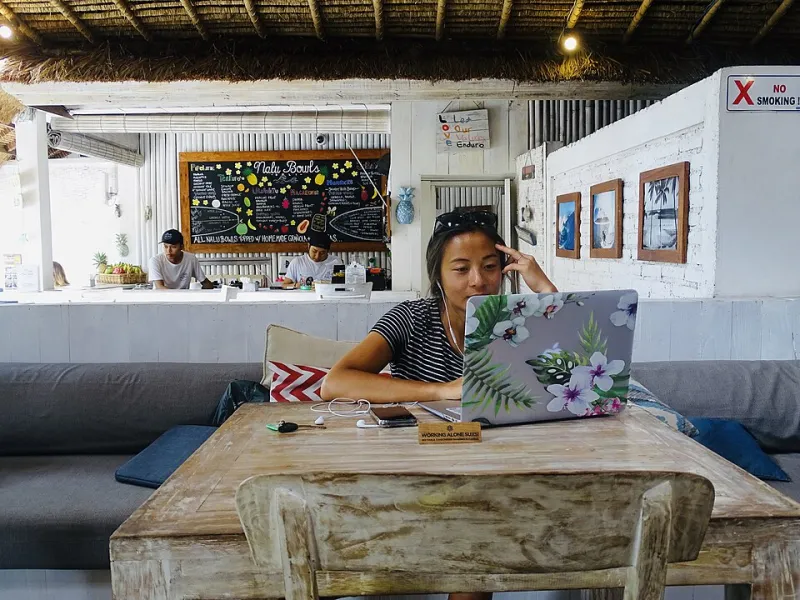
Photo: DominikaMiazek, CC BY-SA 4.0, via Wikimedia Commons
Marcus Webb checks the snowpack report for the Methow Valley every morning in October the same way most people check their email. Not because he skis — he doesn't — but because the snowpack tells him when it's time to leave.
Webb, 38, is a software architect from Austin who hasn't maintained a permanent address in three years. Instead, he follows a loose annual circuit through a handful of US valleys, timing each arrival and departure to the rhythms of the local ecosystem rather than a fixed lease. Late spring through midsummer: a rented cabin in a valley in western Montana. August into fall: somewhere in the Colorado high country, usually around 8,000 feet where the aspens turn early. Winter: a valley in southern Arizona or New Mexico where the light is flat and clean and the trails don't require snowshoes.
"I started thinking about it like a migration," he says over a video call, a ridgeline visible through the window behind him. "Animals don't stay in one place because they're loyal to it. They stay as long as conditions are right, and then they move. I just applied that logic to my work schedule."
Webb is not alone. Not even close.
A New Kind of Valley Resident
Over the past four years, a distinct pattern has emerged among a subset of remote workers — predominantly in tech, consulting, finance, and creative fields — who have moved beyond the "digital nomad" model of hopping between cities and coworking spaces. These are people who've discovered that America's less-traveled valleys offer something that urban hubs and Instagram-famous mountain towns don't: genuine seasonal variation, relative affordability (at least compared to Bozeman or Bend at peak saturation), and the kind of quiet that actually allows focused work.
They're not going to the same places, and they're not operating on the same schedule. But they share a common logic: treat the valley as a temporary home base, stay long enough to develop a relationship with the place, then follow the season out when it shifts.
Some call themselves valley nomads. Others bristle at any label at all.
"I'm not a nomad," says Priya Anand, a freelance brand strategist who splits her year between a valley in the Ozarks, a stretch of the Shenandoah, and a small community in the Gila region of New Mexico. "Nomads don't put down roots anywhere. I put down roots in multiple places. That's different. I know my neighbors in all three spots. I buy local. I show up to town meetings when I'm there."
The distinction matters to her, and it matters to the communities she's part of — even if those communities are still figuring out what to do with people like her.
What the Infrastructure Looks Like (And What It Doesn't)
The valleys attracting this seasonal professional class are rarely prepared for them. That's part of the appeal and part of the problem.
In a small valley community in the Ouachita Mountains of Arkansas, a local real estate agent who's watched the market shift over the past two years describes a housing dynamic that's becoming familiar across rural America. "We started seeing these short-term rentals get snapped up — not by vacation rental investors, but by individuals who wanted to lock in three or four months at a time. They're paying more than locals can afford to pay, but they're also not here long enough to be counted in any planning document."
That transience creates genuine infrastructure gaps. Valley nomads tend to need reliable high-speed internet, good medical access, and decent roads — none of which rural valleys reliably have. Some communities have started investing in exactly these things, partly in response to the influx of remote workers. But those investments don't always serve permanent residents equally.
"The fiber internet that got run out here? That happened because enough newcomers made noise about needing it," says a longtime resident of a valley community in rural Virginia who asked not to be named. "Which is great, I use it too. But it took outsiders with money and time to advocate for something we'd needed for twenty years."
The Economics of a Population That Doesn't Stay
The financial footprint of seasonal valley workers is real but uneven. They tend to spend locally — at restaurants, hardware stores, farmers markets, small grocery operations. In valleys where the traditional economic base has eroded, that spending can feel like a lifeline.
But they don't pay local property taxes (usually), they don't enroll kids in local schools, and they don't show up consistently enough to anchor the kinds of long-term community investments that struggling rural areas actually need. They're a revenue stream, not a foundation.
Jessica Morales runs a small outfitter and guide operation in a valley in southern Colorado. She's grateful for the business that valley nomads bring but candid about the limits. "They're great customers. They tip well, they're interested in the land, they ask good questions. But they're not building anything here. They're consuming an experience, and then they leave before winter, and I'm the one figuring out how to make it through February."
That seasonal mismatch — peak spending in the months when conditions are favorable, followed by departure when things get hard — mirrors the extractive tourism patterns that rural communities have always struggled with, just dressed up in Patagonia and remote work autonomy.
What Happens When the Nomads Outnumber the Neighbors
In at least a handful of small valley communities, seasonal professionals now represent a larger share of the population during peak months than permanent residents. The social dynamics that creates are genuinely strange.
Decisions get made at town halls where the majority of voices belong to people who'll be gone before the consequences land. Local culture — the traditions, the gathering spots, the informal social networks that make a small valley community function — gets diluted or quietly displaced by the preferences of a rotating cast of well-resourced newcomers.
"There's a coffee shop that opened two years ago that caters entirely to the remote work crowd," says one permanent resident in a valley community in western North Carolina. "Great coffee, honestly. But it replaced a diner that had been there since the 1970s. The diner was where people actually talked to each other. The coffee shop has people on laptops with headphones in."
None of this is simple. The valley nomads aren't villains. Most of them are thoughtful people who genuinely love the places they cycle through. But love — even sincere love — doesn't automatically translate into stewardship.
The Question Nobody's Asking Yet
As this trend continues to scale, the conversation about what it means for rural valley communities needs to get more specific. General enthusiasm about remote work "revitalizing" rural America glosses over the difference between transient spending and genuine community investment.
For Marcus Webb, that's a tension he thinks about more than he used to. "I've started asking myself whether I'm actually part of these places or just a very long-term tourist," he says. "I don't have a clean answer. But I think asking the question matters."
The valleys will keep turning through their seasons regardless. The question is whether the people passing through them are paying attention to more than just the weather.