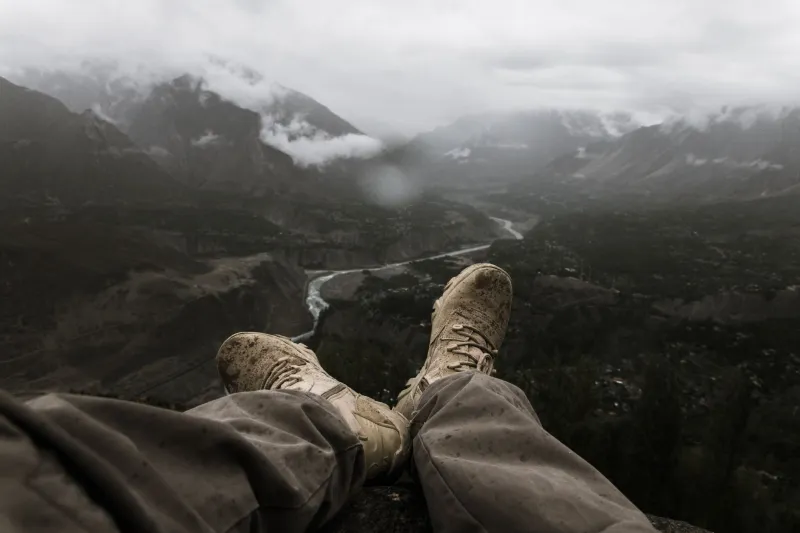
Going In: The Americans Who Are Choosing Harder Places on Purpose
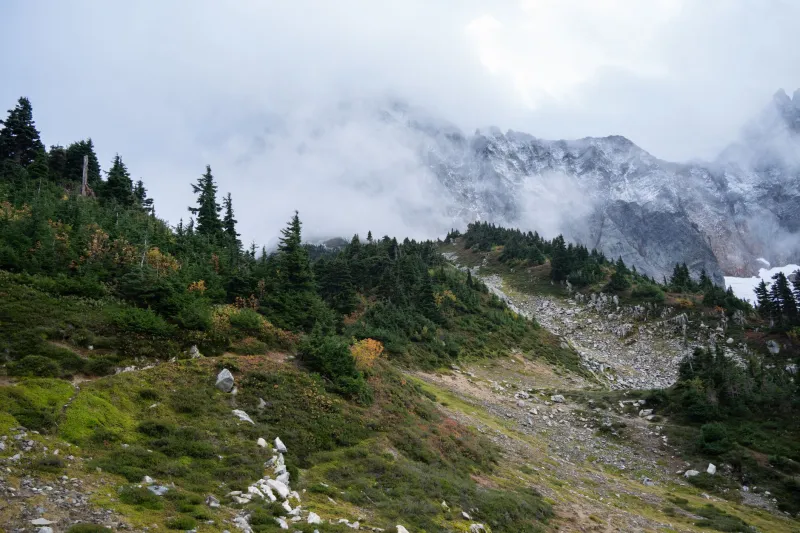
Maura Elkins sold her condo in Nashville in March. Not because she had to. Not because she lost her job or went through a breakup or had some kind of cinematic crisis on a rooftop. She sold it because she wanted to live in a hollow in eastern Tennessee where the cell signal cuts out by 4 p.m. and the nearest grocery store is forty minutes of switchbacks away.
"People keep waiting for the dramatic reason," she says. "There isn't one. I just got tired of being somewhere that made everything so easy and still felt so hard."
Maura isn't alone. Across the country — from the Appalachian ridgelines to the canyon country of Utah to the glacially carved valleys of the Pacific Northwest — a quiet but measurable migration is underway. Americans are moving toward remoteness, not away from it. And the more researchers dig into the data, the more they're realizing this isn't a pandemic blip or a back-to-the-land nostalgia trip. It looks like something more fundamental is shifting.
The Numbers Behind the Feeling
Demographer Renata Solís, who studies internal migration patterns at a research institute in Austin, has been tracking what she calls "deliberate remoteness" for the past four years. Her working definition: people who move to areas with a population density below a certain threshold and who had other viable options.
"What makes this interesting isn't just where people are going," she says. "It's that they're going there on purpose. They're not being pushed. They're being pulled."
Solís's data shows a consistent uptick in this pattern beginning around 2020, but — and this is the part that complicates the easy narrative — it hasn't reversed the way post-pandemic trends usually do. If anything, it's deepened. The people who moved to valleys and hollows and remote river corridors during the chaos of lockdown largely stayed. And they've been followed by a second wave of arrivals who heard about it and decided they wanted in.
Counties in rural Appalachia, the Ozarks, and parts of Idaho and Montana that had been losing population for decades are now holding steady or growing. Small. Slowly. But growing.
What People Say They're Looking For
Spend enough time talking to people who've made this move and a few themes come up again and again. Quiet is the obvious one. But dig a little deeper and it gets more specific than that.
They talk about friction. The productive kind — the kind that makes you aware you're actually doing something. Chopping wood. Navigating a road that washes out in spring. Knowing your neighbors not because an app suggested them but because they're the only other people for miles.
"The frictionlessness of modern life is its own kind of exhausting," says Dr. Joel Abernethy, a psychologist in Asheville who works with clients navigating major life transitions. "When everything is optimized, you lose a sense of agency. You're not making choices — you're just selecting from options someone else curated for you. Remote landscapes give people back a feeling of genuine consequence."
That word — consequence — comes up a lot. A wrong turn in a valley means something. A decision about what to plant or where to store water or how to prepare for a hard winter actually matters. For a generation that grew up with every mistake buffered and every need anticipated, that weight feels, paradoxically, like relief.
The Valley as Counterculture
There's a cultural dimension here that's worth sitting with. Choosing remoteness in 2025 is, in a quiet way, a radical act. Everything about modern American infrastructure — economic, social, digital — is designed around density and connectivity. To opt out of that, deliberately, is to push back against a pretty deeply held assumption about what a good life looks like.
"We've spent decades building a culture that equates access with success," says Solís. "More options, faster delivery, better connectivity. The people moving into these valleys are essentially saying: I don't want more access. I want less. And that's genuinely countercultural."
It also cuts across political and demographic lines in ways that make it hard to slot into a tidy story. Valley migrants include ex-urbanites fleeing burnout and longtime rural families choosing to stay rather than chase opportunity elsewhere. They include remote workers who realized geography was optional and retirees who decided they'd rather spend their savings on land than on a condo near their kids. The common thread isn't ideology. It's a specific kind of dissatisfaction with a world that feels both overwhelming and somehow not enough.
Is This a Permanent Shift?
The honest answer is: nobody knows yet.
Solís is cautious about overclaiming. Migration patterns are slow to solidify, and the infrastructure of remote life — reliable internet, healthcare access, emergency services — remains genuinely difficult in many valleys. "The romantic version of this story is that people are permanently reimagining the American dream," she says. "The realistic version is that it's a trend with real staying power and real limitations. Not everyone who wants to live in a hollow can actually make it work."
Abernethy agrees. He sees clients who thrive in the transition and clients who struggle badly. "Solitude is not a cure," he says carefully. "It's a context. What you bring into a valley with you doesn't disappear. Sometimes it gets louder."
Maura Elkins, for her part, isn't spending much time worrying about whether her choice is a trend or a movement. She's got a garden that needs attention and a roof that needs patching before fall.
"I think people are just tired," she says. "And tired people look for somewhere quiet to figure things out. Whether they stay or not — that's between them and the valley."
The Question the Valley Asks
There's something this migration pattern keeps circling back to, something that sits underneath the data and the demographic charts. It's a question about what we actually want from a life, versus what we've been told to want.
The valleys people are moving into aren't offering more. They're offering less — less noise, less convenience, less stimulation, less of the relentless optimization that defines so much of contemporary American experience. And for a growing number of people, that subtraction feels like the most honest thing they've encountered in years.
Whether that feeling holds — whether the hollows and river corridors and tucked-away mountain valleys become genuine homes or just beautiful intermissions — is still being written. But the fact that so many people are asking the question at all says something worth paying attention to.
Where the map ends, apparently, some people are finally starting to feel like they can breathe.