Surrender the Compass: How Losing Your Way in a Valley Can Finally Show You Who You Are
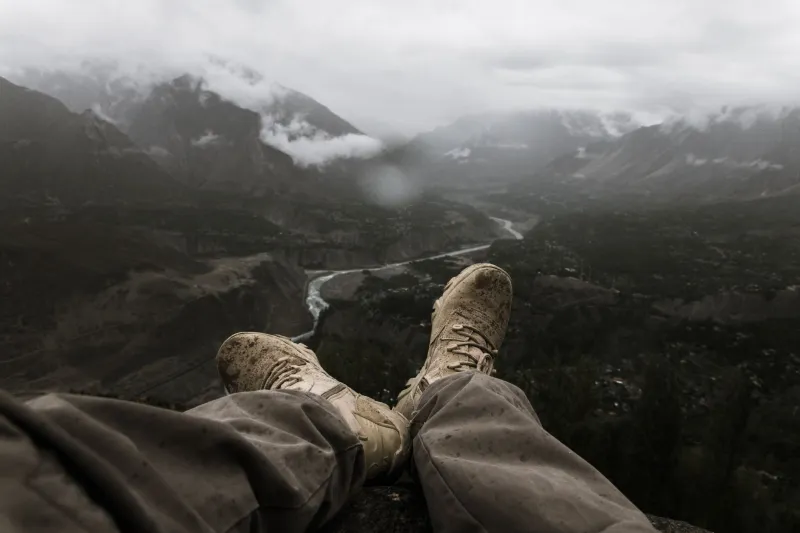
Somewhere in a narrow fold of the Allegheny highlands, a woman named Carrie sat down on a mossy boulder and laughed. Not the nervous kind of laugh you force out when something goes wrong — the real kind, the kind that comes up from somewhere deep. She'd been hiking for about four hours. Her phone was dead. The trail she thought she was following had dissolved into deer paths and creek crossings. She had no idea which direction led back to her car.
"And it was the most okay I'd felt in maybe two years," she told us. "I stopped trying to figure it out and just... sat there. The valley kind of held me."
Carrie isn't alone in this. Across the country, a quiet movement is building among adventure travelers — people who are deliberately, thoughtfully choosing to get lost in remote landscapes as a way of finding something they can't seem to locate anywhere else. It sounds counterintuitive. Maybe even a little alarming. But the psychology behind it is more grounded than you'd think.
The Paradox at the Center of It All
Here's the thing about modern life: we are almost never genuinely uncertain about where we are. GPS tells us our exact coordinates. Mapping apps reroute us before we've even processed that we missed a turn. We've engineered spatial anxiety almost entirely out of the human experience — and according to some researchers, we may have taken something important with us when we did.
Dr. Margot Finley, an adventure psychologist based out of Colorado who works with wilderness therapy programs, puts it this way: "When we remove uncertainty from navigation, we also remove a certain kind of cognitive engagement. The brain shifts from active problem-solving mode into something more passive. That's fine for a commute. But it means we're spending less and less time in the mental state where real insight tends to happen."
That mental state — sometimes called "productive disorientation" in therapeutic circles — is what kicks in when you genuinely don't know where you are and have to rely on observation, instinct, and presence to figure it out. It demands your full attention. And full attention, it turns out, has a way of surfacing things you've been avoiding.
What Valleys Do That Open Terrain Doesn't
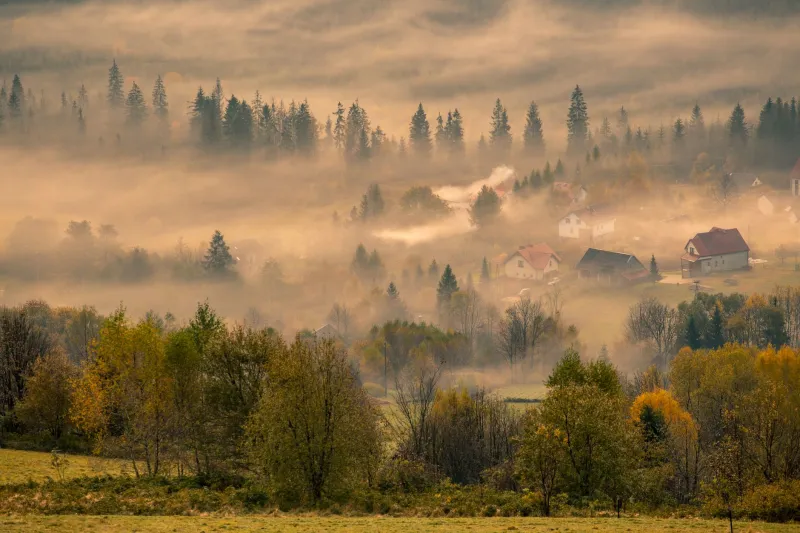
Not every landscape produces the same effect. Deserts and open plains can feel exposing, even threatening, when you're disoriented. Forests can close in. But valleys — especially the deep, enclosed kind you find scattered through Appalachia, the Ozarks, the ranges of the Pacific Northwest, and the hidden cuts of the Rockies — seem to do something different.
They contain you. In a good way.
"There's a psychological concept called 'soft fascination,'" says Finley. "It's what happens when a natural environment holds your attention gently, without demanding anything from you. Valleys are almost perfectly designed for it — the way sound moves differently, the way the light shifts, the sense that you're inside something rather than exposed on top of it. People feel safer getting lost in a valley than they would on a ridgeline."
That sense of containment seems to lower the stakes of not knowing exactly where you are. The valley walls become a kind of reference point even when the trail doesn't. You're lost, but you're not unmoored.
Personal Accounts from the Disoriented
Tom, a software engineer from Austin, describes a trip into a remote valley in the Ouachita Mountains as "the most unintentionally therapeutic thing I've ever done." He'd planned a straightforward out-and-back day hike. What he got was six hours of wandering after he took a wrong fork early on and decided, almost on a whim, to stop trying to correct course.
"I started noticing things I never notice," he says. "Like, actually noticing them — the way a certain kind of moss grows only on north-facing rocks, the sound the creek made when it hit a particular bend. My brain wasn't somewhere else. It was just... there."
By the time he stumbled back to the trailhead — it took him until early evening — he'd made a decision he'd been avoiding for months about a job he'd outgrown. "I didn't think my way to it. It just showed up."
This pattern comes up again and again in conversations with travelers who've had meaningful experiences in remote valleys. The breakthrough rarely comes from thinking harder. It comes from thinking differently — or, more accurately, from thinking less and noticing more.
The Case for Intentional Disorientation
To be clear: nobody is advocating for genuine recklessness. Heading into remote terrain without the basics — water, layers, some sense of the general area, a way to signal for help — is a different thing entirely from what we're talking about here. The travelers and practitioners in this space are careful to draw that line.
What they're describing is something more deliberate. Putting the phone away. Leaving the detailed topo map in the pack. Choosing to follow curiosity instead of a predetermined route. Allowing yourself to be uncertain about exactly where you are within a landscape you've prepared for responsibly.
"It's the difference between being lost and being present," Finley says. "One is an emergency. The other is a practice."
Some wilderness therapy programs in the US are formalizing this practice into their curricula, using guided disorientation exercises in valley environments specifically. The early results, Finley says, suggest meaningful improvements in participants' ability to tolerate ambiguity in their everyday lives — which, if you think about it, is most of what adult life actually requires.
What You Might Find Down There
Carrie, back on her mossy boulder in the Allegheny highlands, eventually found her way out. She followed the creek downstream, which led her to a forest road, which led her back to her car about two miles from where she'd parked. The whole thing took longer than planned and nothing went according to schedule.
She's been back to that valley three times since.
"I think what happens is that when you don't know where you're going, you stop performing," she says. "You're not the person who has a plan. You're just a person in a place. And that's when you find out what you actually think about things."
There's something fitting about the fact that valleys — by definition the low points, the places between the peaks — turn out to be where some travelers find their highest clarity. The map runs out. The signal drops. The trail disappears into something older and less certain.
And right there, in the not-knowing, something opens up.
Maybe that's been the point of valleys all along.