Losing the Drive and Finding the Point: What Remote Valleys Are Teaching Ambitious Americans About Success
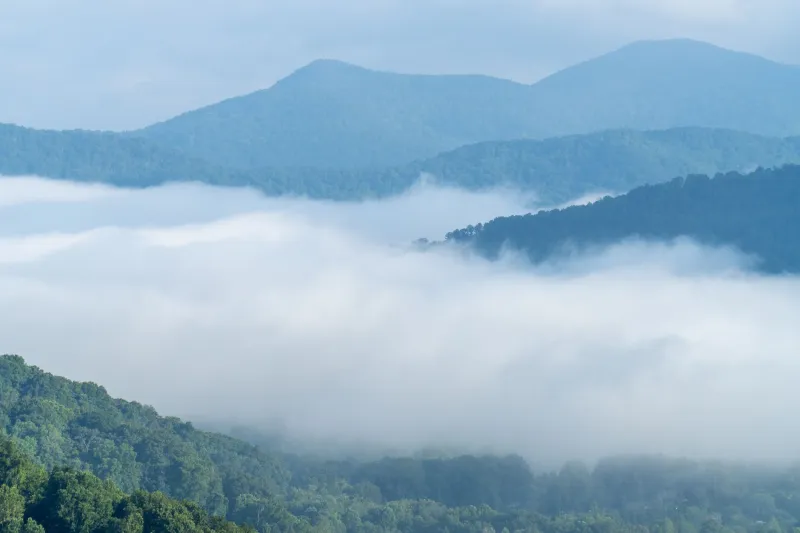
Something happens when you move to a place the map barely acknowledges. It doesn't happen right away. For the first few weeks, maybe even the first few months, you still wake up with the same internal engine running—the one that's been calibrated since college to produce, optimize, advance. Then the valley gets to work on you.
Ask anyone who's made the move. They'll tell you about the morning it hit them: standing at a kitchen window, watching fog lift off a ridgeline, and realizing they hadn't thought about their LinkedIn profile in three weeks. That they didn't care. That the not caring felt, somehow, like relief.
This is what researchers and the people who've lived it are starting to call the Valley Effect—a measurable, repeatable psychological shift that occurs when driven professionals relocate to remote, enclosed landscapes. And the more people talk about it, the harder it becomes to dismiss as simple burnout.
The Ambition Drain Nobody Warned Them About
Marcus Teller spent eleven years building a SaaS company in Austin before he and his wife relocated to a narrow hollow in West Virginia's Greenbrier Valley. He'd planned to keep working remotely, maybe even launch something new. That was three years ago.
"I'm not lazy," he's quick to say. "I still work. But the thing that used to drive me—the scoreboard stuff, the comparison, the needing to be building toward something—it just stopped being loud. I don't know when exactly. It was more like a sound fading out than a switch flipping."
He's not alone. Across Appalachia, the Ozarks, the river valleys of the rural Pacific Northwest, a pattern is emerging among the wave of remote workers and lifestyle migrants who traded metros for hollows over the past several years. They came for the quiet. Many stayed for reasons they're still struggling to articulate. And a significant number report a version of the same thing Marcus describes: competitive ambition didn't just soften. It restructured.
What's Actually Happening in the Brain
Dr. Priya Nambiar, a cognitive neuroscientist at the University of Oregon who studies how built and natural environments influence motivation systems, has been tracking this phenomenon with increasing interest.
"We've known for a while that urban environments are highly activating," she explains. "Density, noise, visual complexity, social comparison cues—these things keep the brain's threat-and-reward systems in a kind of low-grade overdrive. When you remove someone from that context and place them in a slower, more predictable natural landscape, the nervous system literally recalibrates."
What that recalibration looks like neurologically, she says, is a reduction in baseline cortisol and a shift in what the brain registers as rewarding. Goals that once felt urgent—a promotion, a funding round, a follower count—lose their neurological charge. Meanwhile, smaller, more immediate sensory experiences start to fill that motivational space.
"It's not that ambition disappears," Dr. Nambiar is careful to say. "It's that the reward hierarchy reorganizes. What used to feel like a meaningful target can start to feel arbitrary when your nervous system is no longer being constantly primed by comparison and scarcity signals."
In other words, the valley isn't draining ambition. It's exposing the infrastructure that was generating it.
Burnout Recovery or Something Deeper?
There's a reasonable argument that what looks like a geographic phenomenon is really just burnout resolution. Rest long enough anywhere quiet, and the nervous system will eventually downshift. The valley, in this reading, is just a very effective spa.
But the people living this story push back on that framing—and some of the emerging research supports their instinct.
Jenna Okafor left a director-level role at a Chicago nonprofit at thirty-four, burned out and underslept, to move to a small community tucked into a Missouri river valley. She expected to recover, recharge, and eventually re-engage with the kind of work she'd always defined herself by.
"That's not what happened," she says, laughing a little. "I recovered. And then I looked at what I'd been chasing and thought—why? Not in a depressed way. In a genuinely curious way. Like, who told me that was the metric?"
She now runs a small pottery studio out of a converted barn. She teaches two classes a week. She is, by most traditional American measures of professional achievement, operating at a fraction of her former capacity. She describes herself as the most satisfied she's ever been.
"I didn't lose my ambition," she says. "I stopped borrowing someone else's."
The Valley as Mirror
There's a particular quality to enclosed landscapes—the way a valley walls you in just enough to make the outside world feel optional—that seems to accelerate this kind of reckoning. Unlike open plains or coastlines, valleys are bounded. You can see the edges. That containment, researchers suggest, may do something important to how the mind frames possibility.
"When you can see the shape of your world, you start asking whether the shape fits you," Dr. Nambiar says. "Expansive environments can actually sustain avoidance. You keep moving. A valley asks you to stay and reckon."
That reckoning, for many, involves a painful but clarifying audit of what they actually want versus what they'd been conditioned to pursue. The valley doesn't provide answers. It just removes enough noise to make the question audible.
Building Something That Lasts
What strikes you, talking to people living this shift, is how rarely they describe it as a loss. The word that comes up most often is reorientation. They're still building things—gardens, relationships, small businesses, community projects, skills they never had time to develop. They're still working hard. They've just changed the question from how do I grow this? to what is this actually for?
Marcus, back in his West Virginia hollow, is renovating a farmhouse with his own hands. He's learning to keep bees. He's started writing—not content, not copy, just writing—for the first time since college.
"I used to think ambition was the engine," he says. "Now I think it was the noise that convinced me the engine was running. Down here, the engine runs quieter. But it's actually running."
Maybe that's the real finding buried inside the Valley Effect. Not that remote landscapes kill ambition, but that they strip it of its performance layer—the anxious, comparative, externally-validated version that most of us spent decades mistaking for motivation.
What's left underneath, apparently, is still plenty.
It just looks different from the outside. And from down in the hollow, that seems to be exactly the point.